Mushroom Hunting and Matsutake
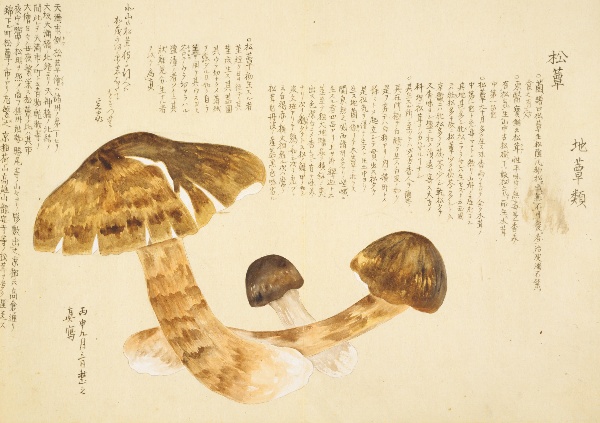
Mushrooms are one of the most representative flavors of autumn and a delicacy from Japan's mountains. Blessed with abundant forests and rainfall, Japan is home to a wide variety of mushrooms. According to the Nihon Shoki (Chronicles of Japan), in 288 CE (19th year of Emperor Ojin's reign), people from the Yoshino region presented chestnuts, mushrooms, and sweetfish as offerings to the Imperial Court. Among mushrooms, matsutake holds a special place for its fragrant aroma, which was celebrated in the Man'yoshu (ancient Japanese poetry collection) with the words: Takamatsu no kono mine mo se ni kasadatete michisakaritaru aki no ka no yosa (All over the peak of Takamatsu, mushrooms stand like a hat upon it and the scent of autumn rises.)
The term "matsutake" first appeared in the Shui Wakashu (Collection of Gleanings of Japanese Poetry) from the Heian period(794-1185). During this era, nobles ventured into the pine forests surrounding the capital for matsutake hunting, and the mushrooms they gathered were enjoyed in grilled dishes and soups, much like they are today.
Matsutake hunting has been an autumn event for nobles since the Heian period, and in the Edo period (1603-1868), daimyo (feudal lords) began to enjoy it. It is said that TOKUGAWA Mitsukuni, widely known as Mito Komon, also enjoyed matsutake hunting after retiring from his official duties. Later, in the late Edo period, mushroom hunting and matsutake hunting became a popular form of recreational mountain outings among the common people in Kamigata.
In Kyoto and Osaka, matsutake markets were held in autumn and were bustling with activity. Nihon Sankai Meibutsu Zue (Illustrated Guide to Famous Products of Mountains and Seas in Japan) depicts the lively scene of the Tenma Ichi no Gawa Matsutake Ichi (Tenma Market Matsutake Fair). In Kyoto, matsutake were also sold at markets located at Takakura-dori Nishiki-kudaru (South of Nishiki on Takakura Street), and greengrocers offered dried and pickled mushrooms.
In Edo, mushrooms were sold in Kanda, Honjo, Senju, and Shinagawa produce markets. However, it was rare to find fresh mushrooms. Instead, the Tokugawa Shogun Family received salted matsutake as gifts from feudal lords in matsutake-producing regions.
Even during the Meiji period, matsutake continued to be highly valued. Renowned literary figures such as NATSUME Soseki and MASAOKA Shiki were also fond of matsutake. They were used in shinsen (sacred offerings) for autumn festivals and offered to the Imperial Court as seasonal gifts. Matsutake were not only a luxury but also a cherished flavor of autumn for ordinary people.
References
- 東昇 著, "京都の産物 : 献上・名物・土産" (臨川書店 2023)
(HIGASHI Noboru, Kyoto no sanbutsu : Kenjo meibutsu miyage, Rinsenshoten, 2023) - 岡村稔久 著, "日本人ときのこ" (山と溪谷社 2017)
(OKAMURA Toshihisa, Nihonjin to kinoko, Yamatokeikokusha, 2017) - 岡村稔久 著, "まつたけの文化誌" (山と溪谷社 2005)
(OKAMURA Toshihisa, Matsutake no bunkashi, Yamatokeikokusha, 2005) - 有岡利幸 著, "松茸" (法政大学出版局 1997)
(ARIOKA Toshiyuki, Matsutake, Hoseidaigakushuppankyoku, 1997)
:::