The Relationship Between People and Birds in the Edo Period
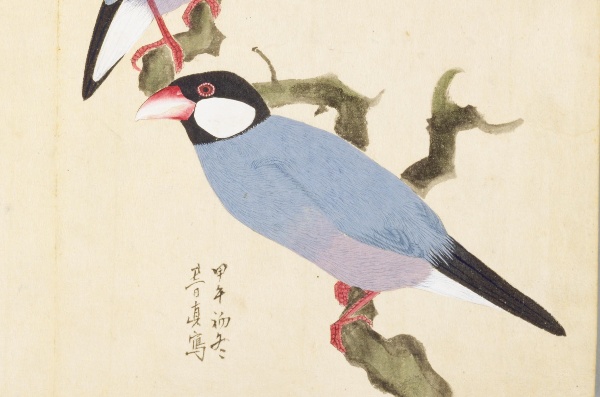
In modern Japan, people keep various animals as pets, including dogs, cats, birds, and other small animals. Similarly, during the Edo period, there was also a trend of keeping birds as pets. Bird-keeping dates back to the Nara period, but during the Edo period, bird-loving daimyo (feudal lords) actively imported exotic birds from overseas. By the mid-Edo period, this trend had spread to commoners, and in addition to keeping birds at home, bird exhibition facilities began to appear. At places like kujaku-jaya (peacock teahouses) and kacho-jaya (floral and bird teahouses), visitors could enjoy exotic birds while dining and relaxing.
Some wealthy daimyo also created zufu (illustrated encyclopedias), featuring detailed depictions of various birds. These illustrations were either drawn by the lords themselves or by naturalists and painters, resulting in beautiful zufu.
This webpage will introduce the relationship between people and birds in the Edo period through the birds depicted in zufu.
Birds Kept by Daimyo, Hatamoto, High-Ranking Samurai, and Nobles
During the Edo period, canaries and parakeets kept by Europeans were brought to Japan. Despite the era of so-called "sakoku" (national isolation), records show that the Tokugawa shogunate and daimyo actively imported many exotic birds through Nagasaki. These birds were kept in spacious gardens and cared for by knowledgeable attendants. For example, it is said that TOKUGAWA Mitsukuni imported kujaku (peacock), seiran (great argus), kasasagi (Eurasian magpie), kinkei (golden pheasant), korai-kiji (Korean pheasant), hakkacho (crested myna), satocho (hanging parrot), benisuzume (red avadavat), goshiki-inko (five-colored parrot), and omu (cockatoo). Reportedly various birds were also kept at Edo Castle.
Imported birds
Birds Kept by the Common People in the Edo Period
During the Edo period, many of the birds kept by commoners were wild birds. Among them, sparrows, bush warblers, quails, and varied tits were especially popular. Quails, in particular, were not only kept as pets but also used as food, with both their eggs and meat consumed. This practice is recorded in the diaries of TAKIZAWA Bakin (1767–1848), a renowned novelist of the Edo period. In the late Edo period, some imported birds had begun to breed and multiply, making them more accessible to commoners. Previously expensive birds such as canaries and Java sparrows became more affordable and widely kept.
The culture of keeping birds spread not only among the Tokugawa shogunate and daimyo but also among the common people. People did not merely appreciate birds' songs or beautiful appearances; they also held competitions to compare birds' singing voices and appearances, enjoying the experience as a shared cultural activity.
References
- 細川博昭 著, "江戸時代に描かれた鳥たち : 輸入された鳥、身近な鳥" (ソフトバンククリエイティブ 2012)
(HOSOKAWA Hiroaki, Edo jidai ni egakareta toritachi : Yunyusareta tori mijikana tori, Sofutobankukurieitibu, 2012) - 細川博昭 著, "大江戸飼い鳥草紙 : 江戸のペットブーム" (吉川弘文館 2006)
(HOSOKAWA Hiroaki, Oedo kaidori zoshi : Edo no petto bumu, Yoshikawa Kobunkan, 2006) - 細川博昭 著, "鳥と人、交わりの文化誌" (春秋社 2019)
(HOSOKAWA Hiroaki, Tori to hito majiwari no bunkashi, Shunjusha, 2019) - 細川 博昭, "「飼い鳥」をカギに、鳥と日本人の関係史を辿ってみる : 江戸のペットブームの中核に位置した飼い鳥" (ヒトと動物の関係学会誌 = Japanese journal of human animal relations (51):2019.2)
(HOSOKAWA Hiroaki, “The History of the Relationship between Birds and Japanese People until the Edo Period” Hito to dobutsu no kankei gakkaishi = Japanese journal of human animal relations, (51), 2019.2) - 大橋弘一 監修, "美し、をかし、和名由来の江戸鳥図鑑" (パイインターナショナル 2020)
(OHASHI Koichi, Utsukushi okashi wamei yurai no edo torizukan = Birds of Edo A Guide to Classical Japanese Birds, Paiintanashonaru, 2020) - 尚学図書言語研究所 編, "鳥の手帖 : 江戸時代の図譜と文献例でつづる鳥の歳時記" (小学館 1990)
(Shogaku Tosho gengo kenkyujo ed., Tori no techo: Edo jidai no zufu to bunkenrei de tsuzuru tori no saijiki, Shogakugan, 1990)
:::